Saturday, 9 March 2013

Is One O'Clock the new Twelve O'Clock?


It's not the despair, Laura. I can take the despair. It's the hope I can't stand. ~ John Cleese (as Brian Stimpson in Clockwise.) 

Even the Met Office man said it on the telly last night - The weather is just toying with us - an hour or two of sunshine and then the cloud descends - or the ice. 

My birthday is in early February and every year as it approaches, a grumpy gloom begins to fall over me. This year it was a big birthday and the gloom has been alleviated by the generous and loving people around me - I've had some wonderful parties and treats - but still, there's a shadow. This could just be end of winter blues - most people seem to feel something similar, we're all hoping for spring and trying not to hope too much in case we're disappointed - but I think it's more than that. When I was younger a birthday was a light in the February darkness, but nowadays it's a reminder of age and ageing, a nudge towards another darkness.  


I'm nervous about writing this here. The internet, blogs, websites, twitter, facebook - are full of such energy, and chatty performance, that it's hard to strike the right tone when confronting difficult subjects.The media is bi-polar - swinging wildly between bad news stories about the coming ageing tsunami, care homes in crisis, Alzheimers, generational wars . . . and good news stories about 90 year olds running marathons, 60 being the new forty, Mick Jagger and Tina Turner strutting their stuff. And I feel the same. One day, I'm fit for anything, the next I'm looking into the abyss. I'd like to look away - as most people do, as I've done to my shame, for much of my life - thinking ooh, not yet, not yet. But now here it is. Three score years and ten. My turn.

Most people, me included, don't find it easy to talk about age, ageing and death - I mean why would you? The language and vocabulary of ageing is dominated by discourses of panicky catastrophising or forced and anxious positivity. I'm a writer so I need to find a way of negotiating this period of my life, as far as I'm able, of finding meaning through words. In the early 60s when I grew up it was difficult to speak and think about being a woman without lurching between opposites - sweet-natured/stupid - dependant/burdensome - beautiful/ugly - weak/needy . . . passive/aggressive . . . and it seems to me that 'age' and 'ageing' is discussed today in similar ways. 


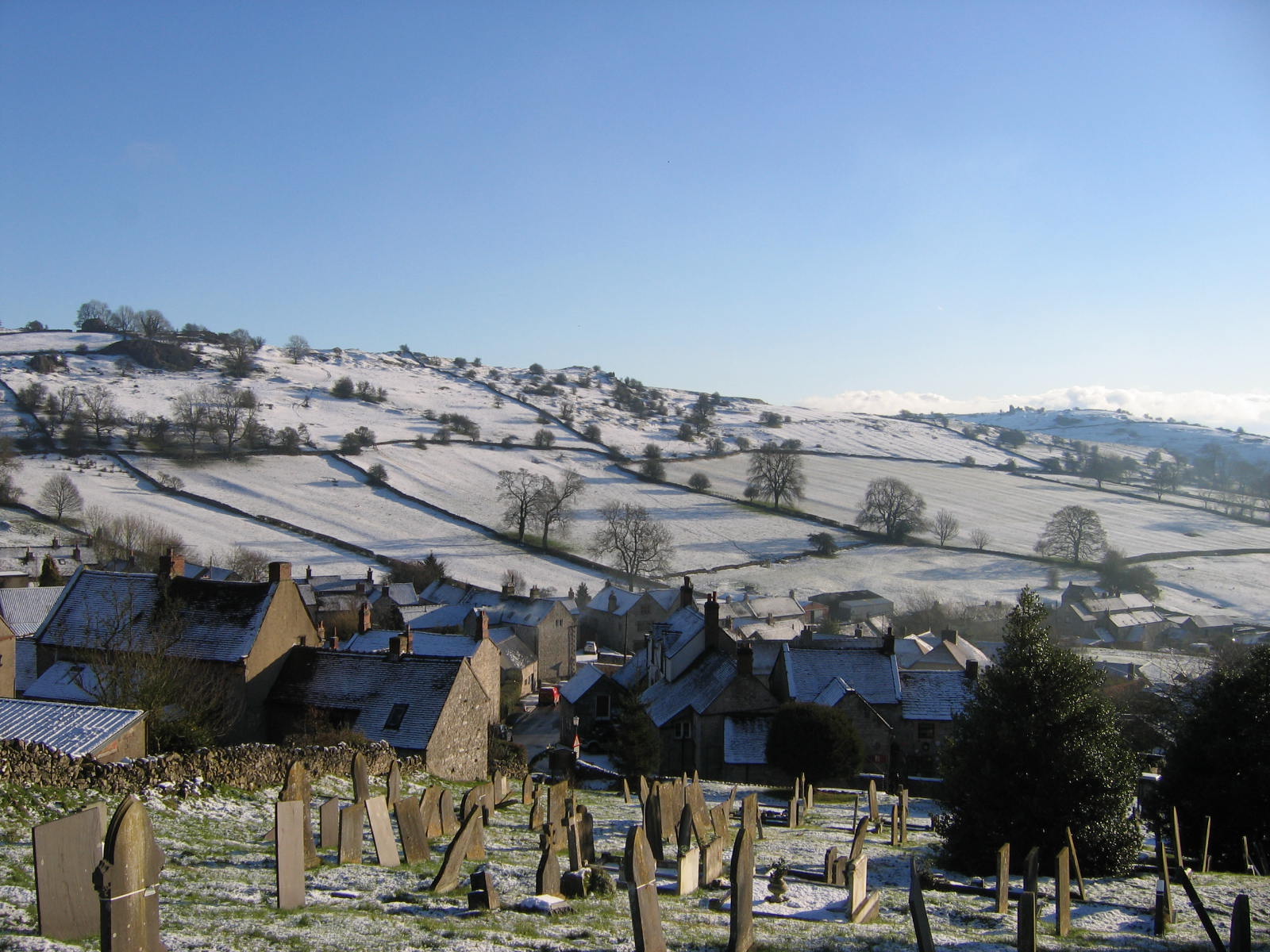
 Back to Brassington. The photographs of gravestones are from St James's churchyard and are here to remind me how lucky I am to have reached this age, to have already had all these years of life. And now the daffodils are coming up on Hillside Lane, February is over - the winter is fighting back but it's nearly gone - the gloom has lifted and this will be our second spring here.

There's another gift that Brassington church is giving me at the moment. The clock is in need of repair and the chimes are out of sync. They're an hour behind - one oclock is twelve chimes and so on. If it isn't fixed by the end of March we'll be two hours behind. I like this - time slowing down, going backwards even . . . soon maybe seventy really will be the new sixty

. . . fifty?

. . . forty?

. . . ?


The end of the beginning

I'm planning to bring this mancinbrassington blog to an end and begin a new website/blog (not sure what form yet) exploring the language and experience of ageing. There are others doing the same and I'd like to make connections for myself and anybody else who's interested. I'll send email and facebook links - so let me know if I haven't got your email and I'll forward the link.

Thanks for being here with me

Heather

Wednesday, 6 February 2013

Where there's Muck . . .


The snow's gone for the moment - although the weather forecast this morning threatens more. Looking at these photographs taken a couple of days ago you could be tempted into thinking about spring. Sun on the fields, blue skies, white clouds floating across the sky. But the wind is bitter and in places that don't get much sun the ground's still frozen. These pictures seem to show a peaceful, quiet world, a flock of sheep, calm winter trees. Which is true up to a point but also an illusion.


In reality, the lanes are full of busyness - tractors carrying bales of hay to the sheep, muck sprayers shooting great fountains of muck over the fields, soggy gobbets of it falling on anyone daft enough to be walking down the road on the other side of a hedge. The roads are smeared and slimy, the air filled with a warm stink as the tractor opposite our house winds up and down the steep hillside turning it from pale winter-green to rich shit-brown. Most cattle are inside at the moment but every now and again there's the sound of a beast making a noise that echoes around the village and sounds like pain. Labour probably.

All this activity makes me aware of how ignorant I am about the proper country - where people have to make a living from the land. I don't want to make too much of the ignorance of townies. I've listened to enough episodes of the Archers to know that the mince in my freezer is minced cow, and having seen Springwatch a few times I could maybe have a stab at pulling out a stuck lamb if called on, which I hope I'm not.

I remember some of the debates a few years back when some of the countryside alliance lot were banging on bad-temperedly about how much cities needed the countryside but knew nothing about it and should therefore butt out and shut up about hunting, shooting and pesticides. I thought then and still think, about how mutual this dependence is, farming and other rural pursuits needing industry and urbanised infrastructure for manufacturing, energy transportation, etc. You can bet that tractor was made in a city somewhere, some of the parts transported here by container, through the global market.

There may be a tendency to romanticise rural life, but the opposite is also true. People can demonise the cities - gun-running on the streets, drug dealers on every corner, crime out of control, etc., whereas the reality is that the huge majority of people in cities, live quiet, productive lives, focused around family, work, pleasure - just as they do here.


Still, we may all be interdependent and equal but there's definitely a lot more muck here than in the city and we've been carrying it in and out of our house attached to shoes and boots for weeks now and need something to avoid it turning our floors into versions of the fields. I'm also planting a hedge around some of the garden which involves even more earth moving.

I finally understand the need for those metal things that you sometimes find outside pubs and stately homes which I used to think were for eighteenth century olde-worlde effect and tripping up the peasants - but I was wrong. There they all are on Amazon - more boot scrapers than anyone could ever need.  The ones shown here are the simplest and cheapest but there's one multiple scraper that costs £350! Obviously plenty of brass in muck.

As well as muck in Brassington.

(Sorry - couldn't resist it.)


Monday, 21 January 2013

Snow Heroes and Slow Heroes


Red skies in the morning then more snow. Six inches laid on top of six inches - much deeper in drifts. I love the transformative beauty of it - but then I don't have to commute to work or school and the worst that's happened so far is that we're running out of vegetables and we won't be going canoeing anytime soon.


Him outdoors has been Him Indoors for the last week as he's had to write a work report but we've managed to get a walk in most days.

I broke my arm on ice a number of years ago which dented my confidence when walking in wintry conditions  - but now with my Leki stick donated by friends and Yaktrax strapped on my boots, I skip up and down the hills and paths like a Tibetan Yak.
Yaktrax are snow heroes. Perhaps everybody who breaks a bone on snow and ice should get a pair issued on the National Health.  Thinking about it, maybe everybody should get some whether they've broken anything or not. Might save us all a lot of money in the long run.


Then there's the Royal Mail. Thick drifts at the bottom of our path that we hadn't had time to clear and the sound of feet pounding through them and up the path then the letter box clanging. It's great to see the little red van parked on the road and the postman trekking doggedly up and down the snow clogged lanes and paths with his bag over his shoulder.

Sadly the post was only two bills and an advert but still heroic I think - Postman Pat vans and men and women stitching us all together despite the weather and the internet. Every day heroes. Use it or lose it.

The third hero is MSR Newsagents in Ashbourne who have managed to deliver the weekend papers. I know a lot of people access papers online these days but for me, the weekend just isn't the weekend without those thick multi-section papers spread over the breakfast table. I like the serendipity of page turning, finding something unexpected, and anyway, they're good for lighting fires with afterwards. There are no paper shops for miles but a van comes out from Ashbourne and goes round the villages - more feet pounding up our steep path, a heavy clunk through the letter box - lifting the heart.  In really thick snow, as now, the papers are left at a drop off point by the Miners Arms pub. I don't know the name of the man or woman who actually drives the van and delivers the papers - but I'm grateful.  Gritter lorries. Farmers taking feed to the animals in fields. Neighbours clearing paths for neighbours.  All heroes.

Snow slows you down. And here's a thing - stopping work - being 'retired' - getting older - all do the same. I'm trying to work out whether this is a good thing or not. When I was commuting to and from work, looking after children, juggling all the things working parents have to juggle, slowing down looked like paradise - something longed for but never quite achieved.  I know plenty of people living that life now who would love a lot more slowness.

But now, here, for me it's a bit like the snow. Beautiful but possibly deadly. I don't want to carry the metaphor too far but there's a tendancy to drift. The romantic idea of ageing and retirement is that you become more tranquil, more accepting, more . . . well, slow. There is some of that. I look around more. I notice small things, take less for granted.

But the same desire to do something, not to be invisible and irrelevant, to have significance and meaning, still rages and burns. The question that bugs me, is whether I should be fighting the drift or learning to lie back and enjoy it.

Acceptance or resistance? Answers on a postcard, please. Keep the Royal Mail in work.    


Monday, 7 January 2013

How to trash a cottage and survive . . . just!


I promised to be back here again in the Autumn but the horror of the building process plus all the moving out and moving in and packing and unpacking again - followed by the unstoppable juggernaut of Christmas - reduced me to a dust-covered wraith, fit for nothing. Not waving but drowning, as Stevie Smith wrote. Or, as in my case, not blogging but coughing. Not writing but whining. 
There's something particularly nightmarish about house-trashing. Builders take it in their stride - just knock this wall down, chuck out this bath, pile up more stuff on the garden, whey-hey, lets make a big heap of rubble! I hope these two photographs convey something of the existential dread I felt when I took them - direct evidence of impermanence - how easily things fall apart.  Of course I chose all this - along with Him Outdoors. We made it happen, so have only each other to blame, and on bad days, we did just that. Whose idea was this? Yours. No, yours. Another perk of married life.  

My more positive-thinking friends remind me that life, even the difficult part, is about learning. Preparation maybe for some final exam? My trouble is that I seem to learn painful truths only after the event - in this case that I don't like DIY and am no good at it, that packing and unpacking is horrible, that mess and clutter make me edgy, that planning processes are labyrinthine and stressful, and that if you move house and start on a building project you get all of the above and more. I kind of knew this before, but now I really know it. A new neural pathway is gouged deeply into my brain. It says NEVER AGAIN. Too late    

Of course, as other cheery-up friends and family say, it'll all be worth it when it's done. I've not reached worth-it yet but it is looking better. The builders have left, we are back in the house and the new extension gives us a lot more space and light. H.O.'s garden workshop is nearly built, the kitchen is modern and easy, most of the rubble heaps have gone.  I've just planted two apple trees and spring will probably come.

Happy New Year!


Wednesday, 25 July 2012

On the move again - Brassington celebrates!

The builders are coming in next week so we're packing stuff in boxes again and getting ready for an onslaught of dust and disruption. We're going walkabout some of the time - holidays, camping out at friends and family, as well as coming back to look after the garden and oversee the work - so look out, we may land on your doorstep with suitcases and sob stories anytime soon! 

In the meantime the sun has come out and the village is celebrating. It's Brassington Wakes Week and it kicked off this weekend with a jumble sale trail, a brass band, plenty of drink taken, and an open air talk from a vicar about icons, which I misheard as acorns for a minute or two. He asked some of the people standing in front of the pub to name their icons/heroes which turned up an odd bunch: Elvis figured strongly, followed by Paul McCartney and, my favourite, in a limited field, Isaac Newton. I wandered off to take photographs and lost the plot a bit with the icon thing, although later I did begin to wonder who I'd have said if I'd been nobbled by the vicar. It would have to be a woman - if only to counter the male-only list provided so far: Germaine Greer, maybe. Mad as a box of frogs but smart and brave. Carol Ann Duffy. Jackie Kay. Doris Lessing. Virginia Woolf. Jessica Hynes. Many of my brilliant friends . . . on and on and on.  

The band was great - best when we were back in our garden with a glass of wine. 

Another of the week's events is a scarecrow competition which has a frighteningly high standard. This year's theme is . . . wait for it . . . yes you guessed . . . the Olympics! Some of them are really art installations which wouldn't look out of place in the Tate Modern. I've posted shots of a few below.


By the time the building work is finished, we'll have been here for a year but I won't be able to keep up the blog while it's going on so I've decided to sign off for three months. Back in the Autumn for a final sign-off, but in the meantime, two things I need to bring up to date. We finally decided to call the house Jackdaw Cottage in honour of the birds which 'chack chack' around us all day. And the raised beds, which we built in spring are now in full and magnificent production.  Slowly, slowly, this place changes us.    


Wednesday, 13 June 2012

Colourful World

In the few gaps between rain, clouds and a cold east wind, I've been out taking pictures. I'm doing a Digital Photography course with the Open University at the moment which has resulted in many of my photographs taking a turn for the worse as I try to work out the best exposure, shutter speed, ISO, focal length, depth of field etc, all by myself. This seemed like a good idea at the time but as, humiliatingly, the camera takes better pictures without the benefit of my interference, it may yet prove to a brief experiment before I slink back to auto mode, tripod between my legs.                                                    


The latest section of the course is all about colour: contrast, hue, saturation, variation.  The spring rains and a few rare sunny summer days have brought out the wild flowers around the village in magnificent abundance.  I've heard people raving about flowers in France and done a bit of raving myself but I've never seen such richness as in the fields and roadsides around Brassington and the Derbyshire Dales. 

 Sheep and cattle browse and doze amongst swathes of celandine, buttercup, speedwell, even orchids. Which brings me to another aspect of colour that only began to dawn on me as I wandered about the place looking for examples of the above-mentioned contrast, variation etc. The animals are all different colours! I may be wrong about this, city bumpkin that I am, but many of them seem to be bred, mixed and mingled for variation. White sheep have black lambs and vice versa. Brown cows have black calves, and this well-tackled bull is the only white beast in a field of black, brown and patch-coloured cows and calves.

In case you're wondering, this photograph of the bull was taken from a safe distance with the zoom lens, although he can barely rouse enough energy to turn his head when anybody passes so he's possibly had some of his masculinity docked or clipped or gelded or something. Possibly he's been displaced by artificial insemination and put out to grass - a future once promised to human males by a particularly militant feminist tendency - watch out chaps.  Whatever, I'll continue to give him a respectfully wide berth.

This variation in animal colouring may be obvious to people who know about farming but as living in a city doesn't throw up many opportunities for hob-knobbing with stock-breeding experts my ignorance is profound about the whys and wherefores although I can probably have a good stab at the hows. I wonder if the cattle and sheep notice skin colour, foreignness, difference?


The sun also brought out multi-coloured peletons of cyclists. It's the men who really go for it, I've noticed. No inhibitions among these chaps about colour co-ordination or the revealing qualities of Lycra.

Cycling gear seems to bring out their inner exhibitionist. Here's one who couldn't quite make it up the hill to Longcliffe but who's flashing a nice pair of calves.  


I was away in London over the Jubilee weekend and so missed the Brassington village celebrations but went to a wet and cheerful street event in Walthamstow. Lots of lovely colours there too.  I didn't see the Queen or the Thames but I did see a Jubilee tug of war and ate falafels, kebabs and gingerbread men. It felt like a very British day out which wouldn't have been the same without the rain. 


Coming back to the garden, the grass is a foot high and in our new raised beds, beans and courgettes and lettuces are growing fast.  Beautiful green!


Monday, 14 May 2012

Slow Walls and Sailing Beds

We're moving on with work on the house, garden and outhouses. When I say we, I have to be honest and say that the bulk of the real work has been done by Him Outdoors and Sandy, a local gardener from Wirksworth, recommended by a neighbour, who has weeded, pruned, shovelled horse manure like a racing demon, which it turns out she is, being a super-fit runner with huge reserves of energy and enthusiasm and we feel fortunate to have found her. We've been working (royal 'we' as above) on the lower flatter part of the garden, where we plan to grow fruit and vegetables.

H.O. has finished pointing the outhouse wall - he may be slow (his dad used to say he only had two speeds, slow and stop) but he does get a job done in the end. I'm afraid I'm a botcher and motcher as far as d.i.y. is concerned, all thumbs and hasty. More haste less speed, Heather, my mum used to say, rule number one - if a job's worth doing it's worth doing well. Sorry mum, should have listened to you. Still, rule number two, find a man/woman who can.

The wall looks beautiful.  


Sandy and R have spent the last week building raised beds out of sleepers.  This slow and fast business also turned out to be an interesting aspect of their methods of working together. She is also extremely thorough and conscientious, but even she was displaced a notch or two on the 'if a job's worth doing' spectrum by Mr Perfectionist Himself. Getting the sleepers exactly right took lots of gnashing of spirit levels and incomprehensible discussions about countersinking of screws. I kept well out of it.  


Dealing with this 'flatter' part of the garden has turned out to be a lesson in relative values. As the raised beds were being built it became clear that it only looked flat in relation to the rest of the garden, plus the hills around and that it was actually so sloped the sleepers had to be embedded into the ground at one end, in order to get a level surface. It took a bit of getting used to but now I think they look great, like wooden ships sailing down the garden.


Next jobs - laying the chippings, putting cordon wires on the wall, planting a plum tree, apple and pear cordons, gooseberries and rhubarb in the side beds and vegetables in the raised beds. I mostly do the growing so it's my turn next to get my hands dirty. Watch this space.

Thursday, 19 April 2012

Six Months in Brassington


We've been in Brassington for six months now and over breakfast this morning me and him outdoors had a chat about how this moving t'country lark is going so far. Here's some of the pluses and minuses that we came up with.


Day by day the sense of strangeness and alienation diminishes - we're becoming familiar, orientated, not just in a landscape, a village, but in relation to the services and resources that make living manageable. Post boxes, post offices, bus timetables, cycle routes, bin collections, banks, cash points, cake shop, paper deliveries. Library, hairdresser, car repairs, doctors, gym, garden centres, building supplies, etc etc.  When you live in the same place for a long time all this stuff becomes easier and also gives a shape, a framework to the area you live in, these regular routes and well-known places become part of who you are, personal traces and tracks, like animal scent marks, smelling of home, normality, self.  It's surprising how much of this you can find out and establish in six months in a new place and this helps us feel more grounded.

I don't miss the city - closed in-ness, pressure of people, traffic, air pollution, constant background noise, people knocking at the door all the time to sell you energy or cable services. Anyway I can go back anytime - in fact I must have been back at least twice a month for the last six months, seeing friends and having meetings. R still misses the sense of being a Manchester man, he misses his political involvement and colleagues and being involved in a big diverse northern city. I've told him I'm happy for him to go back and spend a few weeks or even months there if he fancies a change! But it's all still early days . . . check back in another six months. We both miss living in our friendly cul-de sac with lovely neighbours, being able to pop round for a walk, cup of tea or a pint, we particularly miss Friday night drinks and meals with close friends.


On the other hand we've seen most of them here. Lots of visitors, walking together, sharing this place, more time rather than lots of times.  And there are people here too, kind neighbours, friendly people. There are lots of things going on, some obvious, some under the surface, most of which we don't have a clue about and so we watch, wait and keep our incomer noses clean.

More minuses -
No shop.
More car use - this is not a carbon neutral place to live.
No mobile signal in the village.

We're moving on with practical changes to house and garden. We gained planning permission from the council last week to build an extension and garden workshop plus changes to the inside of the house. We've cut down two overgrown trees - Leylandii - which were dominating the garden and obscuring light and views. R did one, helped by our neighbour C,  and the other bigger one, was taken down with speed and efficiency by two local men.


A big plus for me - one that I've been surprised by - is the joy of having an open perspective, (improved by the tree cutting):  wide sky, hills, distance. Just standing at the window or in the garden, because we're quite high up you can see much of the village with its chimney pots and roofs, the fields around, trees, grass, sheep, lambs, cattle, and to the south and west, the layered landscape of the Derbyshire dales. Like most people, I like the idea of a 'view' but this doesn't fully explain why it's so compelling to see a long way, the eye drawn upwards and outwards to the farthest point, trees silhouetted on the lineof the hill, the horizon, buzzards circling in the air rising above the village. One perfect spring day with hot air balloons sailing over the rooftops.


More pluses -

Walking. Walking. Walking.
Hills and steep garden and paths - makes us fitter.
No car alarms. Birds that sound like car alarms. Real weather.
Wirksworth - nearest small town, liberal, arty, energetic. Cafes, shops, farmers market, transition town, Arts festival.  
The Derbyshire Eco Centre
Two good village pubs - The Miners Arms and The Gate.
Jackdaws and Rooks.
Broadband - not superfast but fast enough.


And now that it's spring, the social calendar is hotting up. Jubilee hat-making for the over 60s in the village hall. (What is a jubilee hat exactly? Is this a national thing? Or just Derbyshire? Are we all supposed to wear hats?) We're booked in for a quiz with bar in the village hall on Friday.  And there's a village planning meeting next week, an Open Gardens event in June and a Wakes Week with its very own Wicker Man in summer.  See Brassington Burns.   Look out all us incomers.


Wednesday, 21 March 2012

The Equinox - Darkness and Light

Today is the equinox, the only twenty four hours in the year when the whole world has equal day and night, light and darkness. A hinge, a tipping point.

Last Sunday we walked a circular route around Brassington - a few hours along almost deserted lanes and paths.There weren't many people or cars about and so I'm tempted to write that it was quiet and calm but actually it was full of energy and noise. There was a palpable sense of tension and anticipation - as if the whole world was pushing at the door that opens between winter and spring.  The weather matched the mood, beginning with snow - ice-green grass, sugar-dust roofs - but then the sun came out, the snow was gone and as we set off up Hillside Lane daffodils were opening in the sunshine.


Half way up the hill behind the village Him Outdoors begins to sweat and swear - too many layers: shirt, fleece, jacket - god I'm hot, it's bloody warm, that sun - so some of the energy and tension as we set off is generated by him and me exchanging views about whether it's too cold or too hot, and whether coats should be taken off or on. Sadly we fit the stereotypical couple profile in the temperature department - I'm rarely too hot whereas a bit of sweating for him is a nightmare that cannot be tolerated. So he has to stop and remove a layer which involves removing other layers and unpacking and re-packing the rucksack. I'm of the 'can't be bothered'  school of outdoor clothing. I put a lot on and leave it on. I might undo the odd zip occasionally but all that layering and packing and unpacking rucksack business seems like an unnecessary faff to me.


We walk down the bridle path between small fields full of heavily pregnant sheep, many of which have given up trying to find grass and are having a lie-down, not surprising with big, ready-to-be-born lambs churning about in their bellies. The grass has only just started growing and tractors have been carrying hay bales to the fields for weeks, the hungry sheep baa-ing loudly whenever they spot one. As most of my knowledge about farming comes from listening to the Archers and watching Springwatch, I'm extremely sketchy about how it all works. I guess the sheep are gathered together so the shepherds can keep an eye on them as they give birth and although it's a benign scene, I imagine there must be a lot of anxiety amongst the farmers right now - snow, grass-growth, viruses. But the sheep are calm, patiently waiting.

 As we carry on down the lane to Balidon, black clouds roll over the hills from the north. Two  horses, looking bizarrely like one eight-legged horse silhouetted against the sky, walk slowly along the brow of the hill.  The sun disappears and it's winter again. No snow, but cold, really cold. Even the horses have blankets on. I zip up. He gets his coat out of the rucksack again, I stand and wait and watch and we have the same exchange of views . . . about weather and coats and me having to hang around waiting . . . that we've been having for thirty odd years. The horses watch us for a while then disappear over the hill.

After a mile or two more, the sun comes out and we're hungry, so this time when he takes off his coat, it's to give me something soft and warm to sit on. He may be a faffer but he's a kind faffer. We hunker down in the lee of an old stone wall to eat our ham sandwiches and drink our coffee under a wide sky the fields and hills laid out before us like a gift. Another spring and here we still are after thirty odd years, together, alive, walking the hills, sitting in sunlight.

On the route back, in the road next to the Tarmac factory, the corpse of a dead hare, most of the flesh of its body eaten, the eyes pecked out, beetles and flies crawling in and out of its skin-stretched ribs, only the long ears still intact.

More fields full of fat ewes, crowded in, close to farmhouses and barns. But then, just as we climb up to join the High Peak Trail, I spot them, far over the other side of a field, near to the hedge. Five lambs. The first this year. March 18th.  


Back in Brassington, the lane leading up to our house, we walk under high trees with rooks hopping about the branches building nests, stealing twigs from each other's nests and caw-cawing loudly. Even birds bicker.